Description
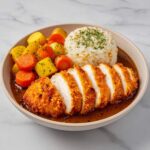
Japanese Katsu Curry is a comforting and crunchy dish featuring breaded and fried chicken cutlets served over fluffy white rice, smothered in a rich and flavorful Japanese curry sauce made with vegetables and apple for natural sweetness.
Ingredients
Scale
For the Chicken Katsu
- 2 pieces Boneless skinless chicken breasts (can be swapped for pork or tofu)
- Salt, to taste
- Black pepper, to taste
- 1/2 cup All-purpose flour (gluten-free flour can be substituted)
- 1 large Egg (flax egg works for vegan option)
- 1 cup Panko breadcrumbs (regular breadcrumbs can be used for less crunch)
- 1 tablespoon Olive oil (for frying; vegetable oil heated to 340°F/170°C used in frying)
For the Curry Sauce
- 1 large Yellow onion (diced)
- 1 medium Carrot (sliced)
- 1 large Russet potato (peeled and diced, Yukon Gold can be used for firmer pieces)
- 2 cloves Garlic (minced)
- 1 medium Red apple (grated; pear can be substituted)
- 2 cups Chicken stock (or vegetable broth as alternative)
- 1 cup Water (adjust as needed for consistency)
- 2 tablespoons Soy sauce (coconut aminos for gluten-free option)
- 1 tablespoon Honey
- 1 pack Japanese curry roux (choose spicy or mild varieties)
To Serve
- 4 cups Cooked white rice (brown rice or quinoa can be used as a healthier alternative)
Instructions
- Prepare the Chicken: Butterfly and pound the chicken breasts to about ½ inch thickness. Season both sides generously with salt and black pepper to enhance flavor.
- Set Up Breading Stations: Arrange three shallow dishes: one with all-purpose flour, one with beaten egg, and one with panko breadcrumbs. This setup makes the breading process efficient and clean.
- Bread the Chicken: Coat each chicken piece first in flour, shaking off the excess. Dip into the beaten egg, then roll in panko breadcrumbs, pressing gently to ensure an even and thorough coating for maximum crunch.
- Fry the Chicken: Heat vegetable oil in a large skillet to 340°F (170°C). Carefully place each breaded chicken piece into the hot oil and fry for 3-4 minutes on each side, or until golden brown and crispy. Drain the fried chicken on a wire rack to keep it crisp.
- Sauté Vegetables: In the same skillet, add a bit more olive oil if needed. Sauté the diced onion and minced garlic until golden and fragrant, approximately 3-4 minutes. Add sliced carrot and diced potato, cooking for 2 minutes to begin softening.
- Add Liquids and Simmer: Pour in chicken stock, water, soy sauce, honey, and grated apple. Bring the mixture to a gentle simmer and cook until the potatoes and carrots are tender, about 15-20 minutes.
- Incorporate Curry Roux: Stir in the Japanese curry roux cubes. Continue to simmer, stirring frequently, until the sauce thickens to your preferred consistency, about 5-10 minutes.
- Assemble the Dish: Slice the crispy chicken katsu into strips. Serve over warm cooked rice and generously ladle the thick, savory curry sauce on top for a hearty meal.
Notes
- You can substitute chicken breasts with pork cutlets or tofu for different protein options.
- For a vegan version, use flax egg instead of chicken egg and vegetable broth instead of chicken stock.
- Gluten-free flour and coconut aminos make this recipe suitable for gluten-sensitive diets.
- Adjust the level of spiciness by choosing mild or spicy Japanese curry roux.
- Using Yukon Gold potatoes helps keep vegetable chunks firmer in the curry sauce.
- Leftover rice can be refrigerated and reheated but is best served fresh for optimal texture.